

Fire equipment servicing and building insurance in NSW: what owners should know
Owners often ask whether skipping routine checks on fire extinguishers, emergency lights or fire doors can affect their insurance. The honest answer depends on the policy wording, but the link is real. This guide covers what NSW owners corporations must insure, what insurers say about maintenance, and the servicing records worth keeping for each item.
Key facts
- NSW owners corporations must hold building insurance to replace or reinstate the building to as-new condition, public liability insurance with a stated minimum of $20 million, and in some schemes work health and safety insurance.1
- The Insurance Council of Australia describes insuring the building for 100 per cent of its replacement value as mandatory for the owners corporation, and lists damage caused by inherent defects or poor building maintenance as not covered.2
- Chubb Australia says all fire equipment should be maintained by an approved fire protection contractor to AS 1851, and names extinguishers and hose reels among equipment that needs maintenance.3
- Chubb says poor maintenance can increase property damage and expose owners to possible litigation. It does not state an insurer requirement, and says policy wordings govern.3
- We found no source showing that a standard policy makes servicing or the annual fire safety statement a condition of cover. Ask your broker or insurer.3
- Section 54 of the Insurance Contracts Act limits when an insurer can refuse a claim over something an insured did or did not do after the policy started.5, 6
- AS 1851 records must be kept for at least seven years, and a hard copy logbook must be left on site.4
Why are fire equipment servicing and insurance linked?
Two separate rule sets meet in the same building. Fire safety law makes the owner responsible for maintaining the essential fire safety measures and for lodging the annual fire safety statement.4 Insurance law makes the owners corporation responsible for insuring the building.1, 7 When something goes wrong, such as a fire or a claim after a defect, the records can matter as much as the equipment: what was on site, when it was tested and what was done about faults. That is why this guide treats servicing records as evidence, not only paperwork.
We focus here on the equipment people see and use every day: portable fire extinguishers, hose reels and fire blankets, emergency and exit lighting, and fire and smoke doors.
What insurance must a NSW owners corporation hold?
The NSW Government lists three mandatory types of insurance for owners corporations:1
- Building insurance that covers replacing or reinstating the building to as-new condition, including professional fees and debris removal. The NSW Government recommends a new valuation every two to five years so the sum insured keeps pace with building costs.
- Public liability insurance for property damage and for injury or death claims against the owners corporation, with a stated minimum of $20 million.
- Work health and safety insurance for a worker's work-related injury or disease, unless the scheme directly employs no workers and is only residential.
Cover such as shared contents and temporary accommodation is optional but often bundled by insurers.1 The Insurance Council of Australia describes insuring the building for 100 per cent of its replacement value as mandatory, and notes that a strata policy typically covers damage to common areas, temporary accommodation costs and a minimum level of liability cover.2 The duties come from the Strata Schemes Management Act 2015 and its Regulation.7 Single owners of commercial or industrial buildings are outside the strata rules, but the points below still apply, subject to their own policy wording.
What does strata insurance typically not cover?
The Insurance Council of Australia's fact sheet lists damage caused by inherent defects or poor building maintenance as not covered. It names inadequate building maintenance and insufficient risk management among the factors behind unexpected repairs, and says that where repair or rebuild costs are not fully covered, the owners corporation's accumulated funds must pay.2 In plain terms, a policy pays for insured events, not for the consequences of neglect, and any shortfall lands on the scheme.
What do insurers say about maintaining fire equipment?
Chubb Australia's risk engineering guidance says fire protection equipment is used infrequently, so its reliability is critical and it must be ready to operate at all times. It says all fire equipment should be maintained regularly by an approved fire protection contractor in accordance with AS 1851, and that hydrants, hose reels and extinguishers also need maintenance. It adds that inadequate maintenance may increase the extent of property damage and, in some circumstances, may expose managers or owners to possible litigation if a system does not operate correctly in a fire.3 The article is general information, says policy wordings govern, and does not state an insurer requirement or a policy condition.3
What should the servicing record show for each item?
These are the records we would expect to see for the equipment in our scope. They are a suggested evidence file, not an insurer requirement:
- Fire extinguishers: date of each service, tag details, units replaced or recharged, and any unit removed from service.
- Hose reels and fire blankets: hose reel flow and condition results, blanket condition and date checks, and any item replaced.
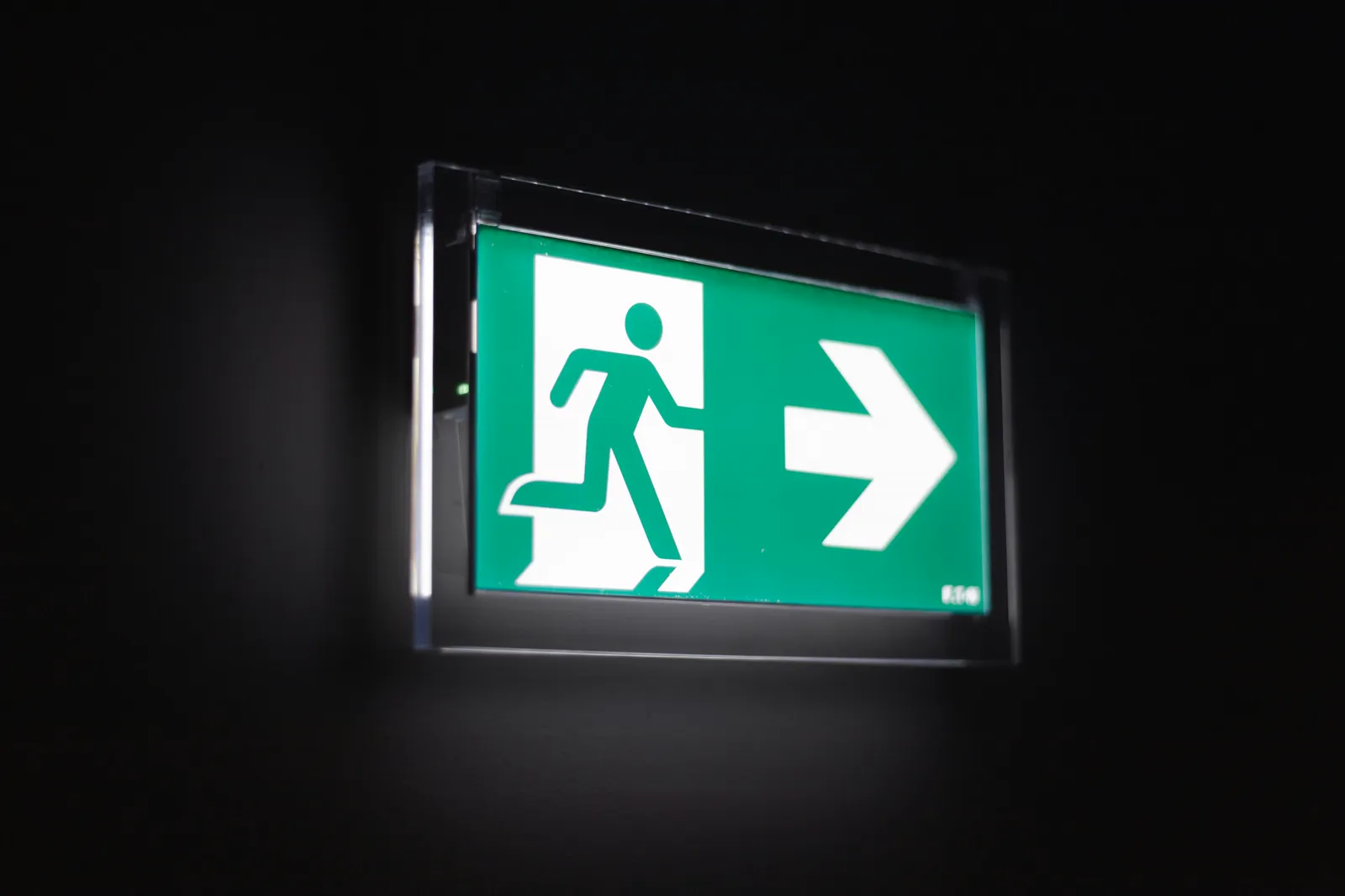
- Emergency and exit lighting: discharge test results, fittings that failed, signs checked, and when failures were fixed. The Building Commission gives emergency exit lighting as an example of a measure AS 1851-2012 does not cover, so keep the records to its own standard, AS 2293.2.4
- Fire and smoke doors: closers, seals, gaps and latching checked, faults found, and the date each was fixed.
- Every visit: technician name, date, what was tested and what passed or failed. The Building Commission requires AS 1851 records for at least seven years and a hard copy logbook on site.4
Where does the annual fire safety statement fit?
The annual fire safety statement is the yearly record that an accredited practitioner (fire safety) has assessed each essential fire safety measure, and the owner or agent signs it.4 We found no source requiring it as an insurance condition, but it is the formal summary of the year's checks, so keep the latest statement and the displayed fire safety schedule with your evidence file, and give them to your broker if asked. Our guide to annual fire safety statements explains the process.
Can missing servicing affect a claim?
It can, but there is no single rule. We found no insurer policy wording in our research that makes servicing of extinguishers, lighting or doors a condition of cover, and we cannot see yours. What matters is your policy wording and the facts of the claim. As background, section 54 of the Insurance Contracts Act 1984 limits an insurer's ability to refuse a claim because of an act or omission that happened after the policy began. In general terms, an insurer may still refuse where the act or omission could reasonably be regarded as capable of causing or contributing to the loss, and otherwise may be able to reduce a claim only to the extent it was prejudiced. The Australian Financial Complaints Authority publishes plain-language guidance on how it applies the section.5, 6 This is general information, not legal advice. Ask your broker or a lawyer how your policy would respond.
Insurance also does not remove your legal duties. The Building Commission cites fines of $33,000 for individuals and $66,000 for corporations for not meeting the AS 1851 requirements.4 Ask your broker whether your policy responds to fines or penalties at all.
Questions to ask your broker or insurer
- Does the policy contain any condition, warranty or exclusion about maintaining fire equipment such as extinguishers, emergency lighting or fire doors?
- What servicing records or fire safety statements do you want at renewal, and in what form?
- Do we need to tell you about open fire safety defects, such as a failed emergency light or a faulty fire door closer, and when?
- Is our sum insured based on a current valuation, given the NSW Government's recommendation of every two to five years?1
- Does public liability meet the stated NSW minimum of $20 million?1
- Does the policy cover temporary accommodation, and are fines or penalties covered?
A practical routine for committees and owners
- List every extinguisher, hose reel, blanket, emergency light, exit sign and fire door, and file the fire safety schedule with the list.
- Book routine servicing on a calendar, so intervals are never missed.
- Track faults to completion, and record each decision in committee minutes.
- Send your servicing summary and latest annual fire safety statement to your broker before renewal, not after a claim.
- Review the valuation and liability limits each time you renew.
Where Southern Fire Protection fits
We inspect, test and service fire extinguishers, hose reels, fire blankets, emergency and exit lighting and fire and smoke doors, and record each visit with dates, results and faults, so your logbook and evidence file stay complete. We arrange the accredited practitioner your annual fire safety statement needs. We are not insurance brokers or advisers, so take policy questions to your broker. Ask for a quote.
Frequently asked questions
Is building insurance compulsory for a NSW strata scheme?
Yes. The NSW Government lists building insurance as mandatory for owners corporations, covering replacement or reinstatement of the building to as-new condition, alongside public liability insurance and, in some schemes, work health and safety insurance.
How much public liability cover does an owners corporation need?
The NSW Government's strata guidance states a minimum of $20 million. Check the current Strata Schemes Management Regulation or ask your broker to confirm.
Does strata insurance cover damage from poor maintenance?
The Insurance Council of Australia lists damage caused by inherent defects or poor building maintenance as not covered. Check your own policy wording.
Can an insurer refuse a claim because extinguishers or emergency lights were not serviced?
It depends on the policy and the facts. Section 54 of the Insurance Contracts Act limits when an insurer can refuse a claim over an act or omission after the policy started, but an insurer may still refuse where the omission could have contributed to the loss. Ask your broker or a lawyer.
What servicing records should we keep for fire equipment?
Keep dated service reports for extinguishers, hose reels, blankets, emergency and exit lighting and fire and smoke doors, a fault register with fix dates, the AS 1851 logbook for at least seven years, and your latest annual fire safety statement.
Does the annual fire safety statement help with insurance?
We found no source requiring it as an insurance condition, but it is the formal yearly record that each measure was assessed, so keep it with your evidence file and give it to your broker if asked.
Does insurance pay fines for missing fire safety requirements?
We found no source saying it does. Ask your broker whether your policy responds to fines or penalties.
Sources and further reading
- NSW Government: Managing strata finances and insurance Last updated 22 June 2026. Accessed 12 November 2026.
- Insurance Council of Australia: Improving outcomes for strata residents (fact sheet) November 2024. Industry body fact sheet. Accessed 12 November 2026.
- Chubb Australia: Maintaining sprinkler and fire detection systems Dated 08/2024. General information; policy wordings govern. Accessed 12 November 2026.
- Building Commission NSW: Responsibilities of building owners under AS 1851-2012 Last updated 12 February 2026. Accessed 12 November 2026.
- Australian Financial Complaints Authority: The approach to section 54 of the Insurance Contracts Act 1984 Plain-language approach to section 54. Accessed 12 November 2026.
- Federal Register of Legislation: Insurance Contracts Act 1984 (Cth) A 2020 compilation. Check the current compilation for section 54. Accessed 12 November 2026.
- NSW Legislation: Strata Schemes Management Act 2015 Insurance duties for owners corporations are in Part 9. Accessed 12 November 2026.
Checked against the sources above on 12 November 2026. Rules, forms, fees and council processes change, so confirm the details with the source or your council before you act. This guide is general information, not legal advice. Southern Fire Protection is not affiliated with any of the bodies listed.
Need your fire equipment serviced?
We inspect, test and service fire extinguishers, hose reels, fire blankets, emergency and exit lighting and fire and smoke doors across Wollongong, the Illawarra, Southern Sydney and the South Coast.
Get a quote