



Fire extinguisher servicing in Wollongong and the Illawarra
We inspect, test, tag and record every portable fire extinguisher in your building, so you know each one is ready to use and you can show that it was checked.
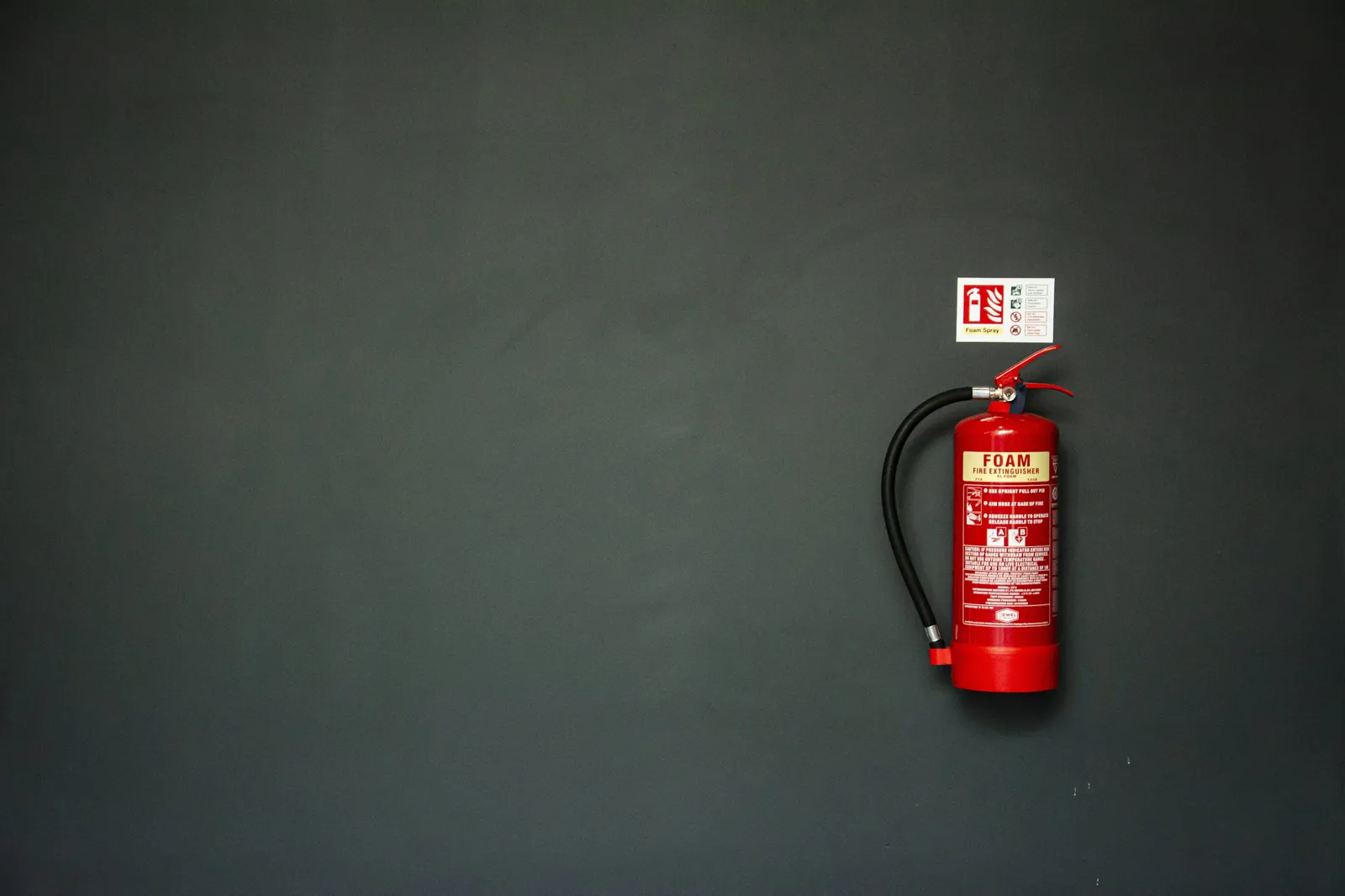
inspect, test, tag and record each portable extinguisher.
a tag on every unit, a dated service report listing each extinguisher by location, and a defect list with a quote.
AS 1851 routine servicing, which NSW owners must follow from 13 February 2026. 1
Wollongong, Shellharbour, Kiama, Southern Sydney, Campbelltown and Macarthur, Wollondilly, the Southern Highlands, Nowra and the South Coast.
What we check on every extinguisher
Swipe sideways to see the whole diagram.
- It is where it should be, easy to reach, mounted properly and has its sign.
- The pressure gauge, safety pin and tamper seal are in order.
- The hose, nozzle and handle are undamaged and the cylinder is free of dents and corrosion.
- The label and date marks are readable, and the unit is the right type for what is around it. AS 2444 covers selecting and locating extinguishers.
- Any unit that fails is marked and reported, not left on the wall.
What we look for
These are the problems that turn up when equipment is checked properly:
- Units that are blocked, hard to reach or sitting on the floor instead of on a bracket
- Missing, faded or wrongly placed signs
- Broken tamper seals or missing safety pins
- Gauges reading outside the operating range
- Cracked hoses, damaged nozzles or unreadable labels
- Extinguishers that are the wrong type for the hazard nearby
What you receive after each visit
- A service tag on every extinguisher showing the date and the technician.
- A dated report listing every extinguisher by location and what was found.
- A defect list with a quote for each repair or replacement. Nothing is replaced until you approve it.
- An entry in your AS 1851 logbook, so the building's record stays complete. The Building Commission requires records for at least seven years.1
How often do extinguishers need servicing?
AS 1851 sets the service schedule, and the Building Commission says owners must have essential fire safety measures inspected and tested to it.1 Service providers commonly describe a six-monthly routine for portable extinguishers, with longer-interval tasks such as pressure testing on a multi-year cycle. We work from the schedule that applies to your building and put each due date in your record. Chubb Australia also says extinguishers and hose reels need regular maintenance by an approved fire protection contractor.2
Replacements
If a unit fails its service or is the wrong type for the area, ask us about a certified replacement. Extinguishers sold in Australia must meet a mandatory national standard based on AS/NZS 1841, which covers construction, testing and markings.3
Who this is for
Strata and owners corporations, offices and retail, childcare centres and schools, aged care, cafes and pubs, and warehouses. If you manage several buildings, we can keep one record across them. Ask for a quote and tell us how many extinguishers you have and where.
How a visit works
Walk the building
We go through the building with your list or plan and find every unit.
Inspect and test
Each extinguisher is checked against the points in the diagram above.
Tag and record
A tag goes on every unit and each result is written to your record.
Report and quote
You get the report and a quote for any defect. Nothing is replaced until you approve it.
What to have ready
- A list or floor plan showing where extinguishers should be
- Your last service report or the tags on the units
- Your fire safety schedule, if you have one
- Access to plant rooms, tenancies and locked cupboards
- A contact who can approve repairs and replacements
Where we work
We service Wollongong, Shellharbour, Kiama, Southern Sydney, Campbelltown and Macarthur, Wollondilly, the Southern Highlands, Nowra and the South Coast.
We will confirm we cover your suburb. See also where we work on the homepage.
Frequently asked questions
How often should fire extinguishers be serviced?
AS 1851 sets the schedule. Service providers commonly describe a six-monthly routine for portable extinguishers, with longer-interval tasks such as pressure testing on a multi-year cycle. We work from the schedule for your building.
What is the tag on a fire extinguisher for?
The service tag records that the unit was inspected and when, and by whom. It supports your AS 1851 records.
Who is responsible for servicing the extinguishers in a building?
In NSW the owner must ensure essential fire safety measures are inspected and tested to AS 1851-2012, using competent persons.
What happens if an extinguisher fails inspection?
We mark it, list it in the report and quote the repair or replacement. Nothing is replaced until you approve it.
Do you supply replacement extinguishers?
Ask us about a certified replacement when a unit fails or is the wrong type for an area.
How much does extinguisher servicing cost?
It depends on how many units you have, their types and where they are. Send us your equipment list or address and we will quote for your building.
What types of fire extinguisher are there?
Common types include water, foam, dry powder, carbon dioxide and wet chemical. Which type suits an area depends on what could burn there. AS 2444 covers selecting and locating extinguishers.
Can I service my own fire extinguishers?
Under AS 1851 the owner must have essential fire safety measures inspected and tested by competent persons. A visual look from a building manager is useful between services but does not replace a competent service and record.
Sources and further reading
- Building Commission NSW: Responsibilities of building owners under AS 1851-2012 Last updated 12 February 2026. Accessed 12 November 2026.
- Chubb Australia: Maintaining sprinkler and fire detection systems Dated 08/2024. General information; policy wordings govern. Accessed 12 November 2026.
- ACCC Product Safety: Portable non-aerosol fire extinguishers (mandatory standard) Consumer Goods (Portable Non-aerosol Fire Extinguishers) Safety Standard 2021. Accessed 12 November 2026.
Last reviewed . Checked against the sources above. Standards, rules and intervals change, so confirm details with the source before you act. This page is general information, not advice. Southern Fire Protection is not affiliated with any of the bodies listed.
Tell us the building and what is due
We will come back with a price, or a time to visit.